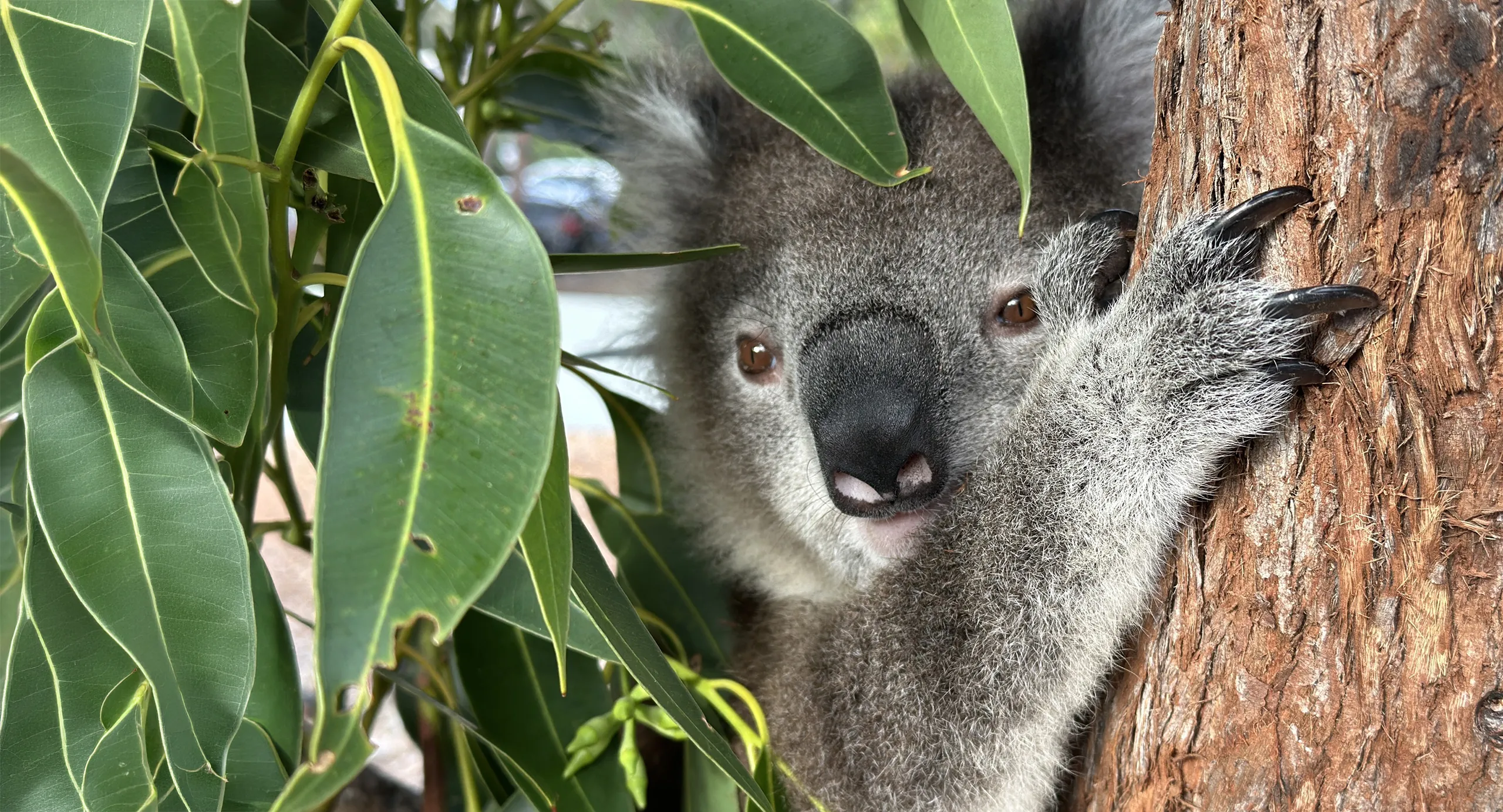
Injured koala? Call 1800 775 625 for 24/7 rescue
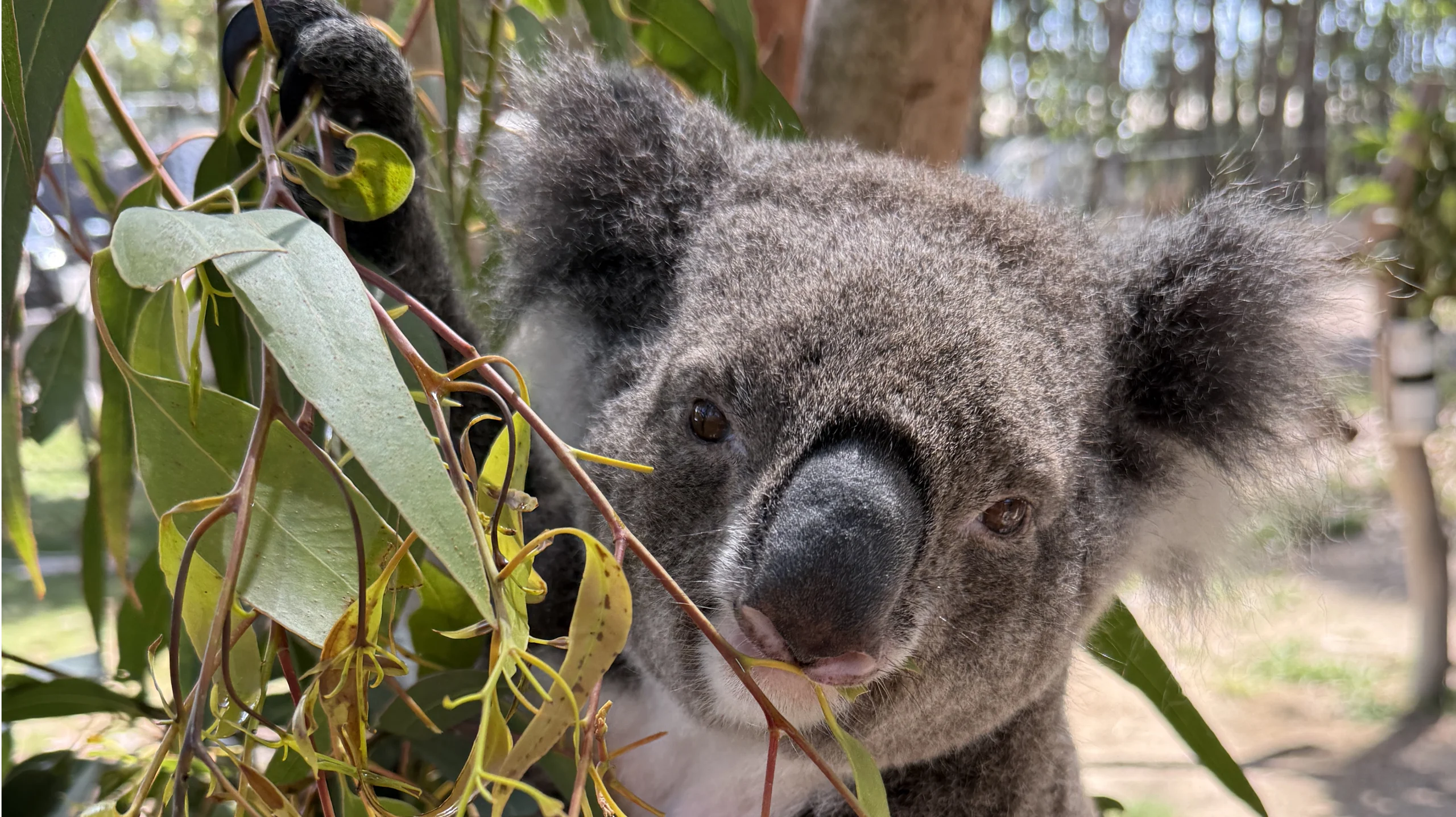
Learn and explore
Koala fun facts and education
Find out more about these iconic Australian animals and what makes them so unique.
All dollars spent go into supporting koala care and conservation.
Koala facts that help us learn, care and protect
Whether it’s a school project, wildlife curiosity, or a love of our Australian native animals, we love sharing fun and educational koala facts.
Learn how they live, what makes them unique, and the challenges they face in the wild – from their diet and behaviour through to conservation pressures today.
The more we know, the more we care – and the more we care, the more we can help protect them.
Did you know?
- The word ‘koala’ comes from an Aboriginal word meaning ‘no drink’. That’s because they get most of their hydration from eucalyptus leaves and rainwater on tree bark. Its Latin name is Phascolarctos cinereus.
- Despite being called ‘koala bears’, they’re not bears at all. Koalas are marsupials, closely related to kangaroos and wombats.
- Koalas can live for about 12 to 15 years in the wild Australian bush but can live up to around 18–21 years in captivity.
- Koalas have tiny fingerprints that look so much like human fingerprints that even scientists can sometimes mix them up.
- Koalas have a thickened rump pad that helps them sit comfortably and securely in the forks of eucalyptus trees for long periods.
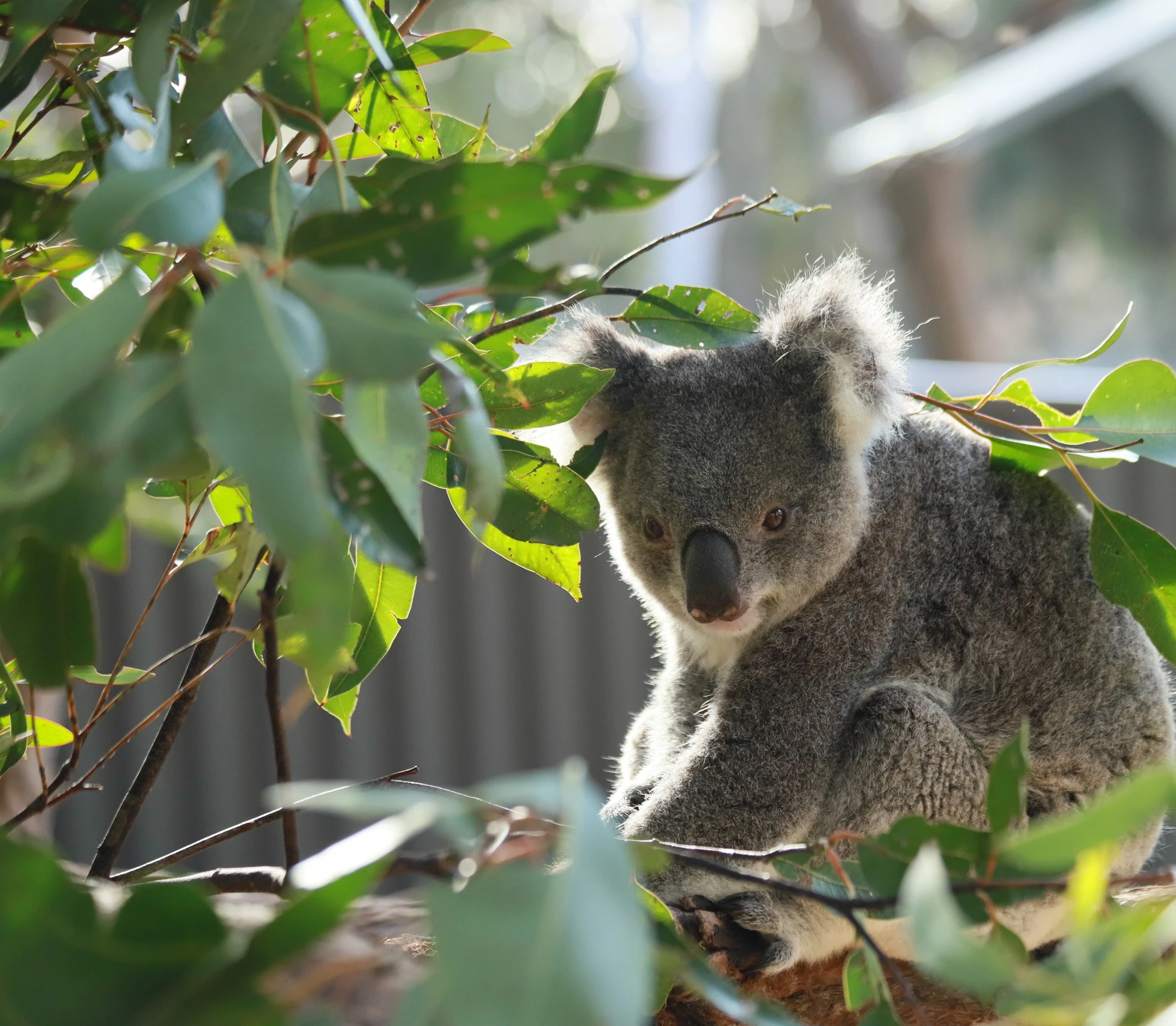
- Koalas in New South Wales and Queensland koalas in Eastern Australia are usually smaller and silvery-grey. In comparison, koalas in Victoria and South Australia are bigger and fluffier with reddish-brown fur.
- Today’s biggest wild koalas are about as heavy as a very large cat, but ancient giant koalas (Phascolarctos stirtoni) were even bigger.
- Koalas’ closest living relatives are wombats. Both are mammals called marsupials (the Vombatiformes family) and share a common ancestor from millions of years ago.
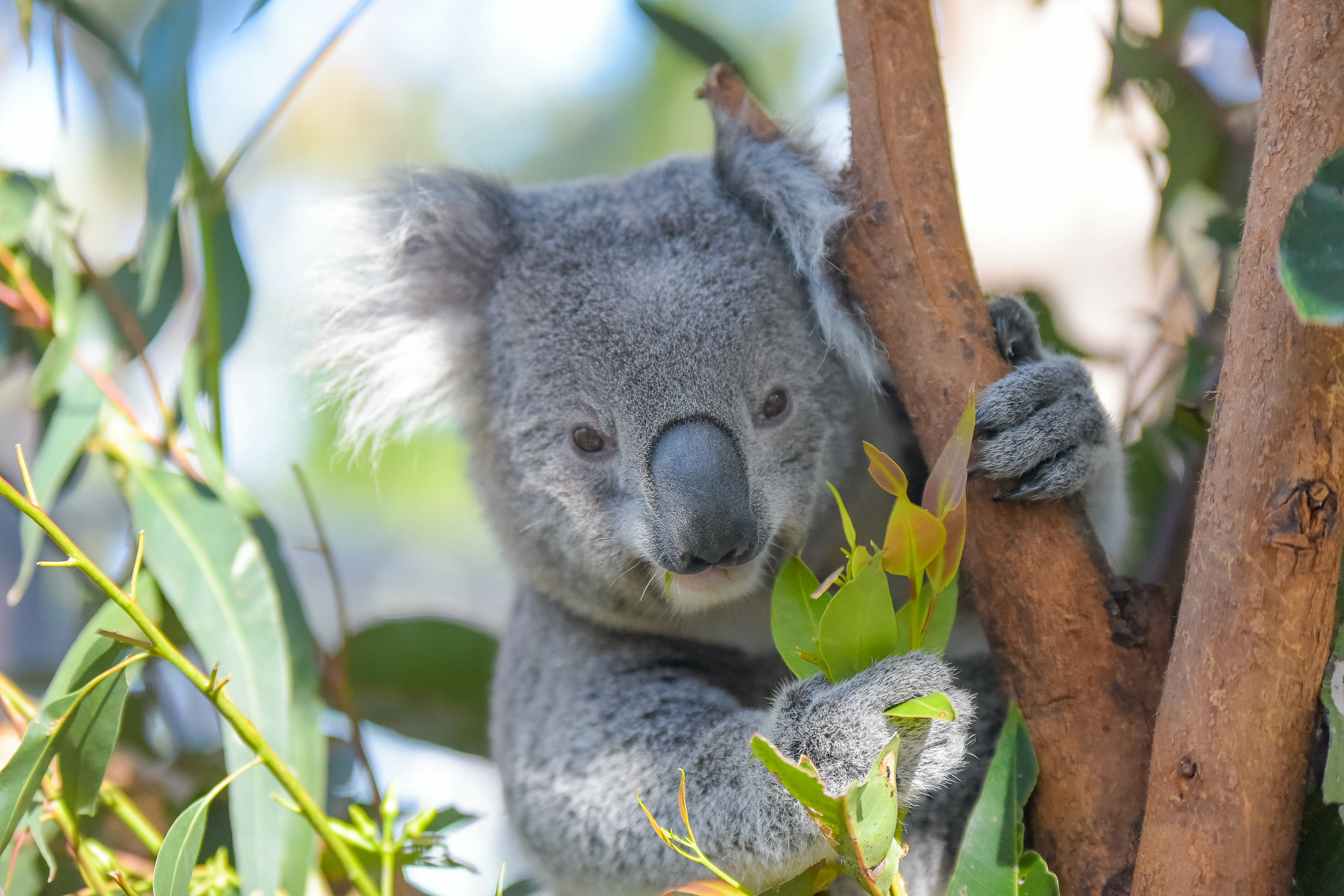
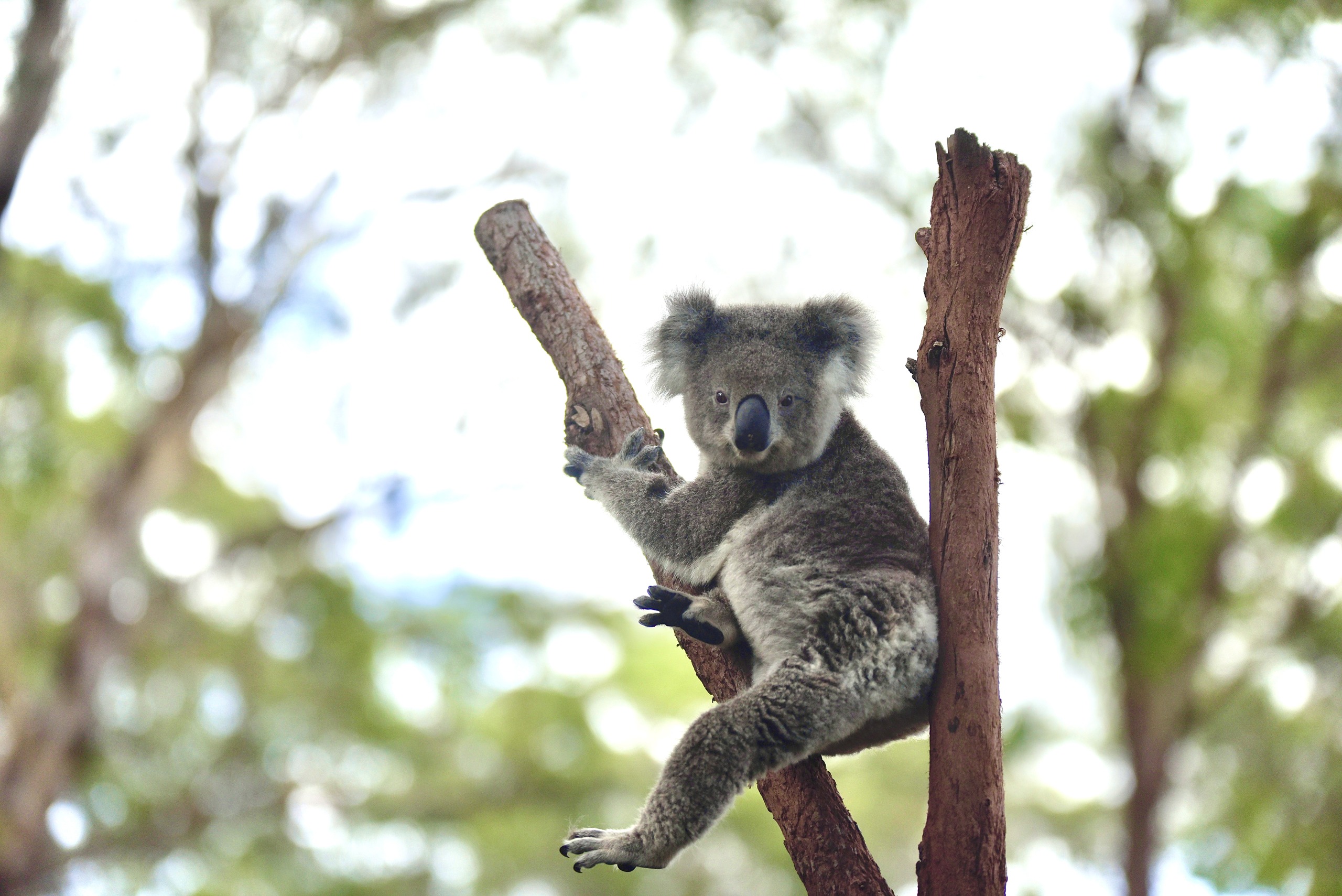
Koala feeding
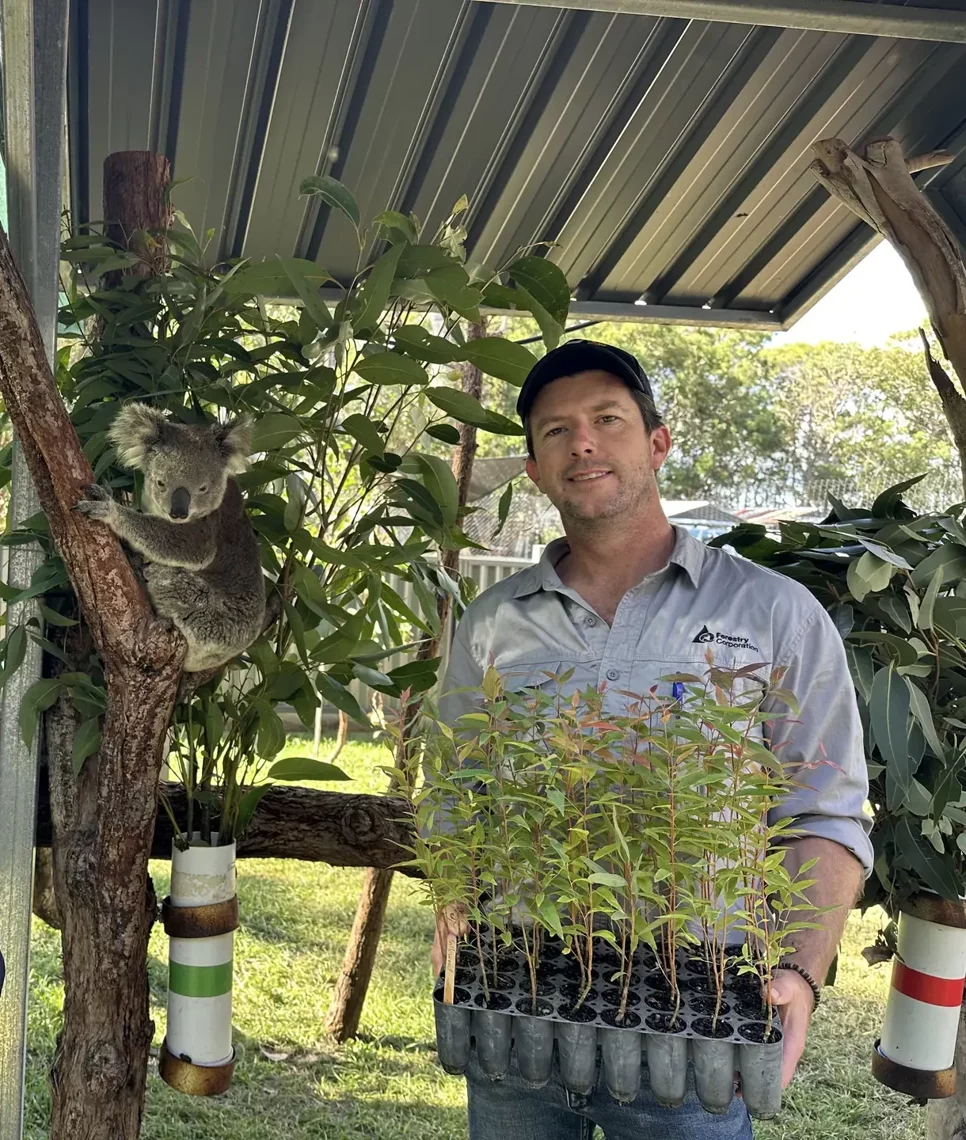
- Koalas eat up to one kilogram of fresh eucalyptus tree leaves a day, depending on their size. But they’re pretty fussy, eating only several of the 800 species that exist – and only from trees in the area they live.
- Koalas often choose leaves at the top of the tallest eucalyptus forest trees because they hold more liquid and nutrients.
- Koalas have a specialised stomach with helpful bacteria that break down tough, toxic eucalyptus leaves.
Looking for more information and facts about koalas?
Discover the range of informative and engaging koala books available in our shop.
If you have any questions, please contact our Education Coordinator at education@pskh.com.au
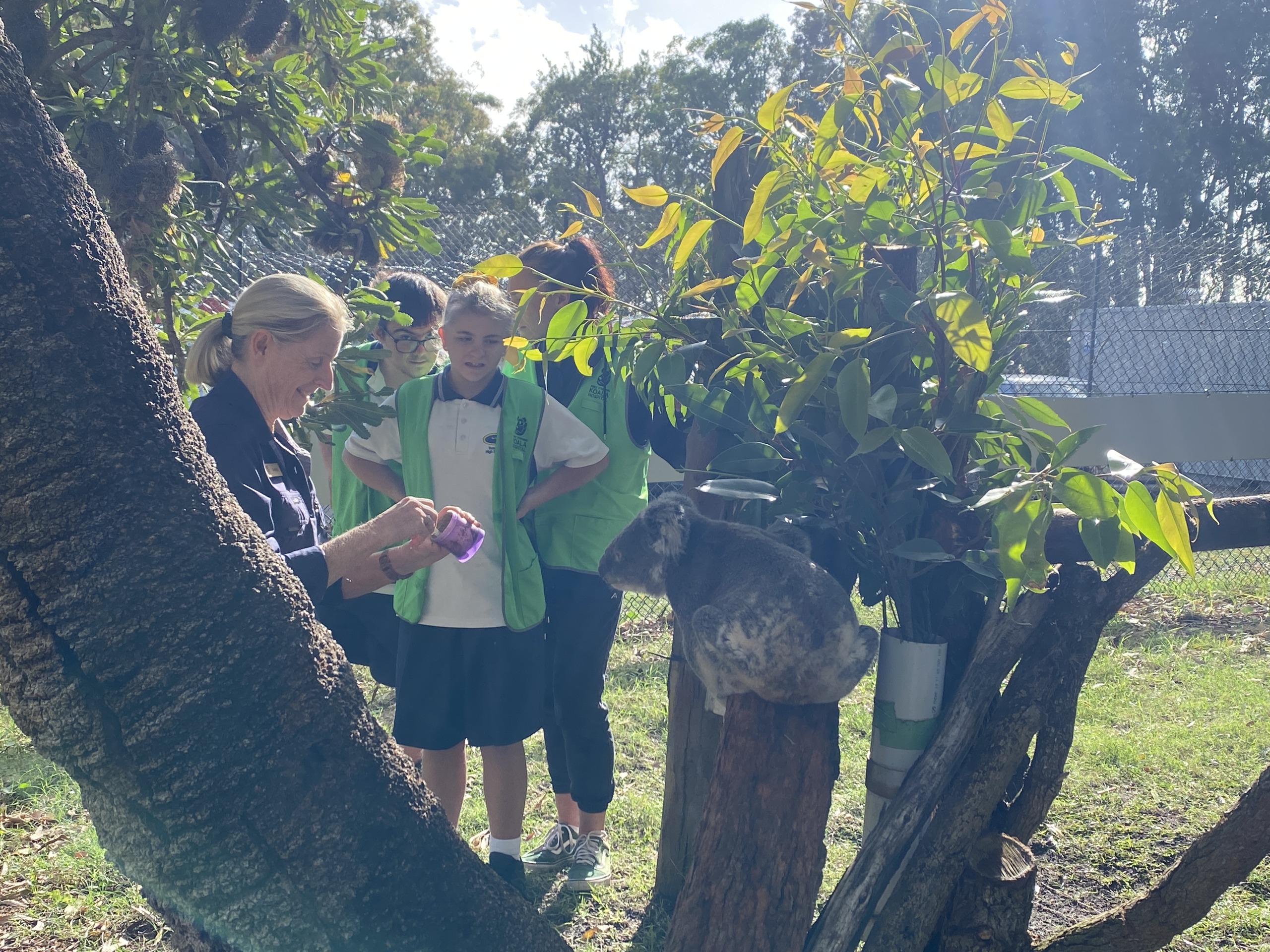
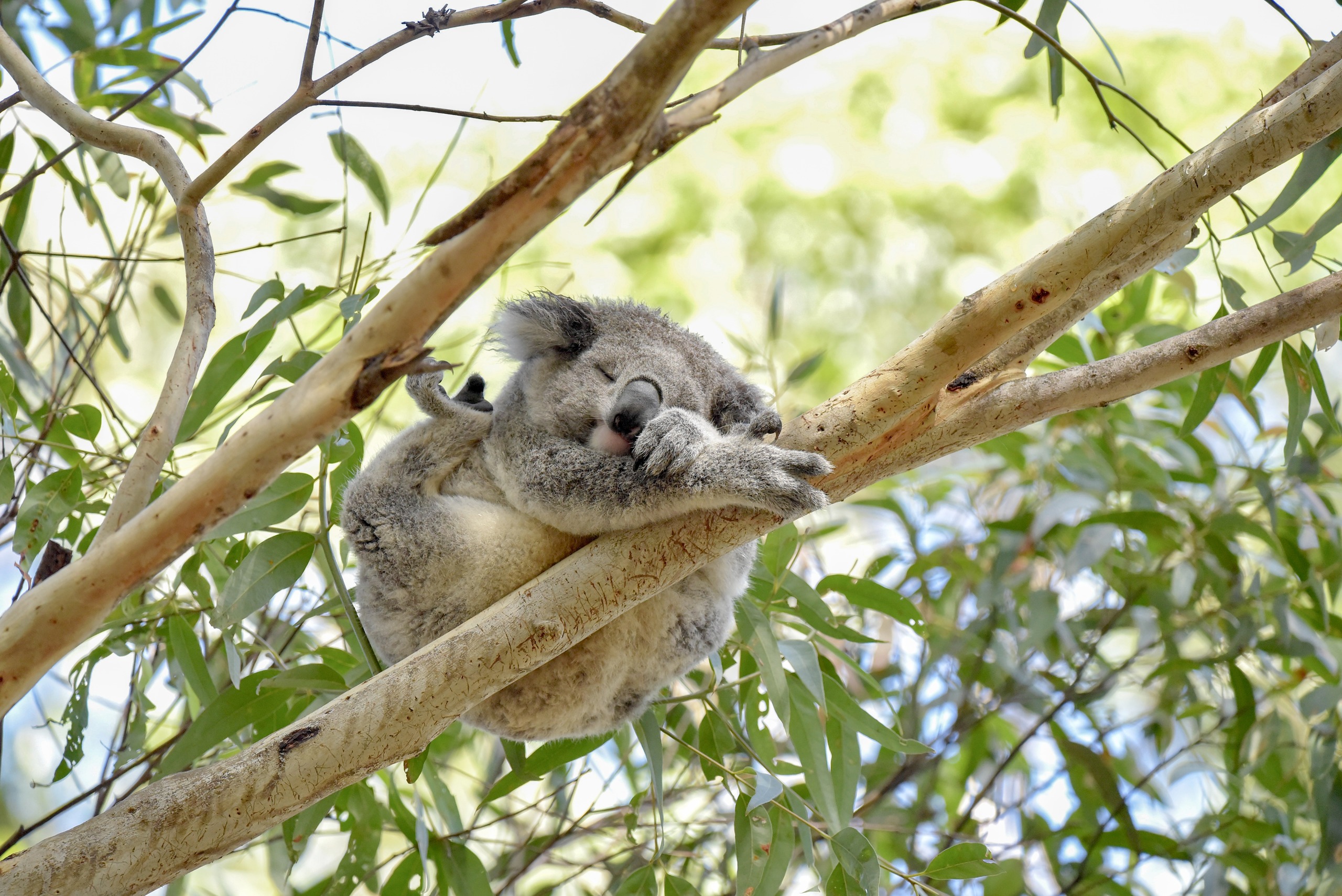
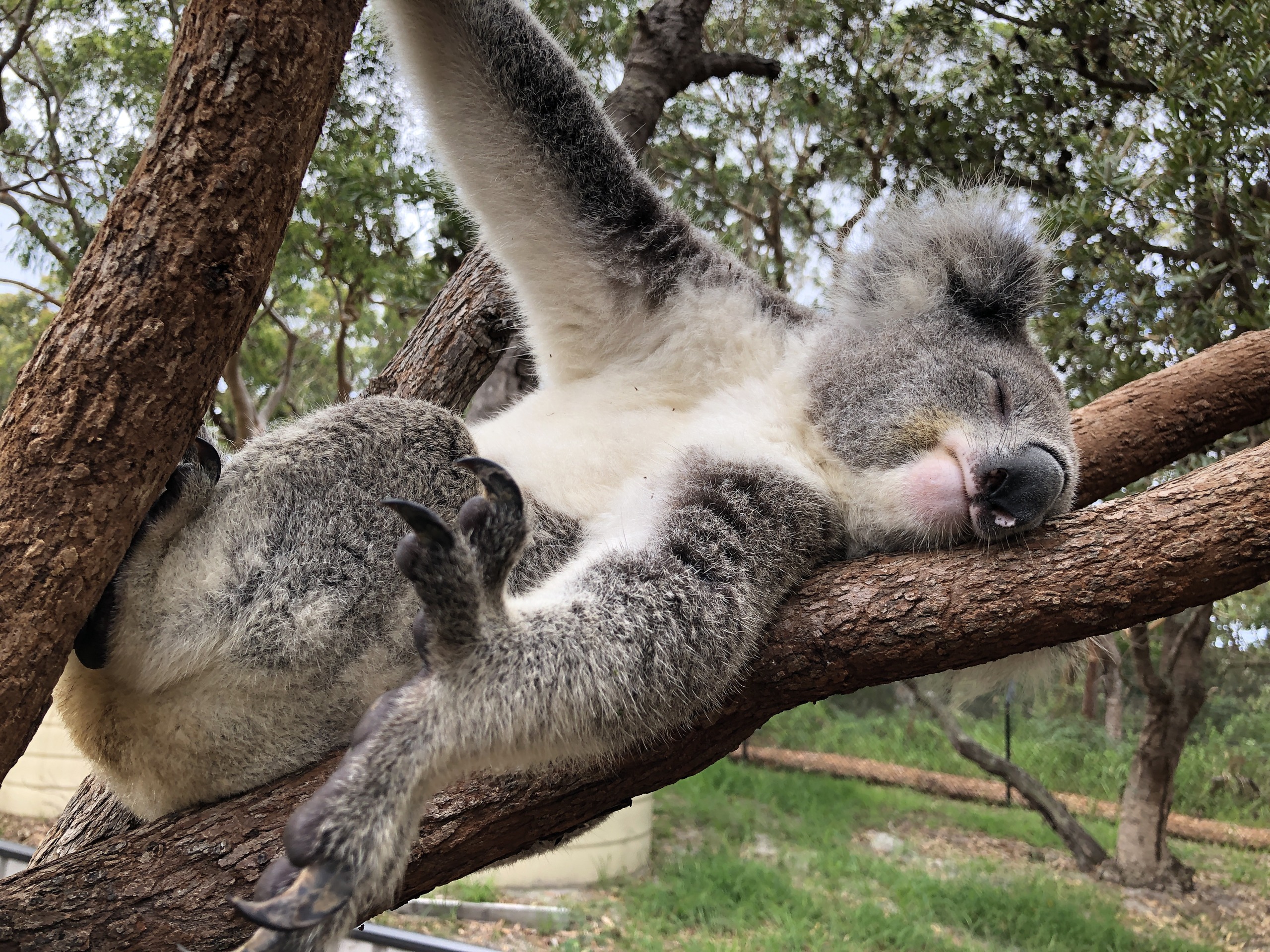
Koala daily life
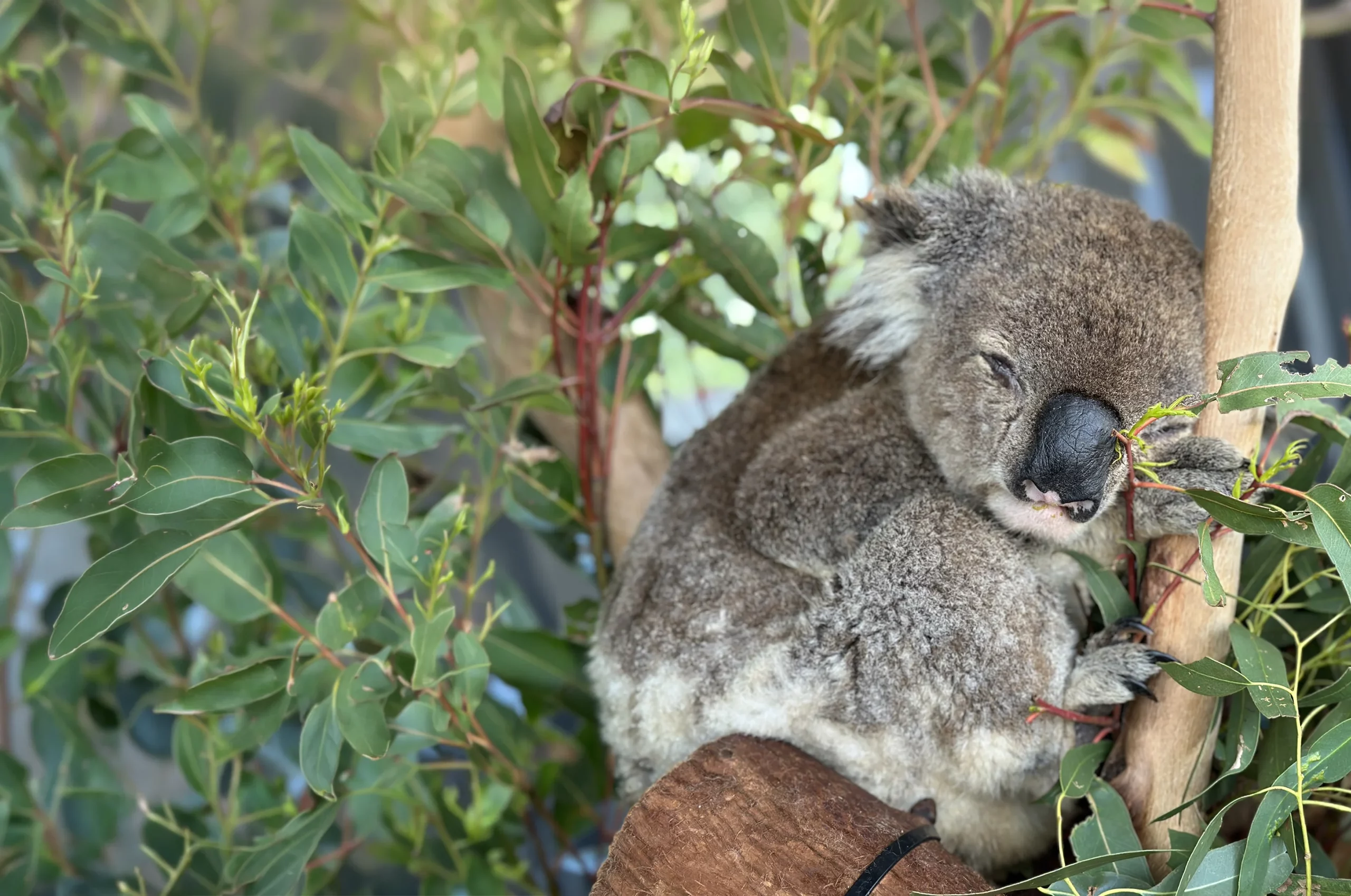
- Koalas sleep for up to 18–22 hours a day as their eucalyptus leaf diet provides very little energy.
- Koalas have strong, sharp claws and special hands and feet for gripping tree branches, including opposable digits that help them climb.
- Koalas are usually solitary animals and spend much of their time in trees away from other koalas.
- Koalas aren’t strictly territorial. They live in overlapping home ranges that vary from a few to several hundred hectares depending on habitat quality. Females often share space with neighbours, while males typically range more widely across several females’ areas.
- Male koalas have a special scent gland on their chest that they rub on trees and branches to mark their territory. Because of this, you can smell koalas when they get close and in warm weather.
- Koalas are crepuscular animals – most active in the early morning and evening. During the heat of the day, they rest and sleep high in trees to conserve energy, becoming more active as temperatures cool.
Meet our koalas
Our goal is always to return koalas to the bush where they belong. Sometimes, however, an injury, illness or other circumstance means they can no longer survive safely in the wild. These special animals become our resident koalas, each with their own unique story, personality and quirks.
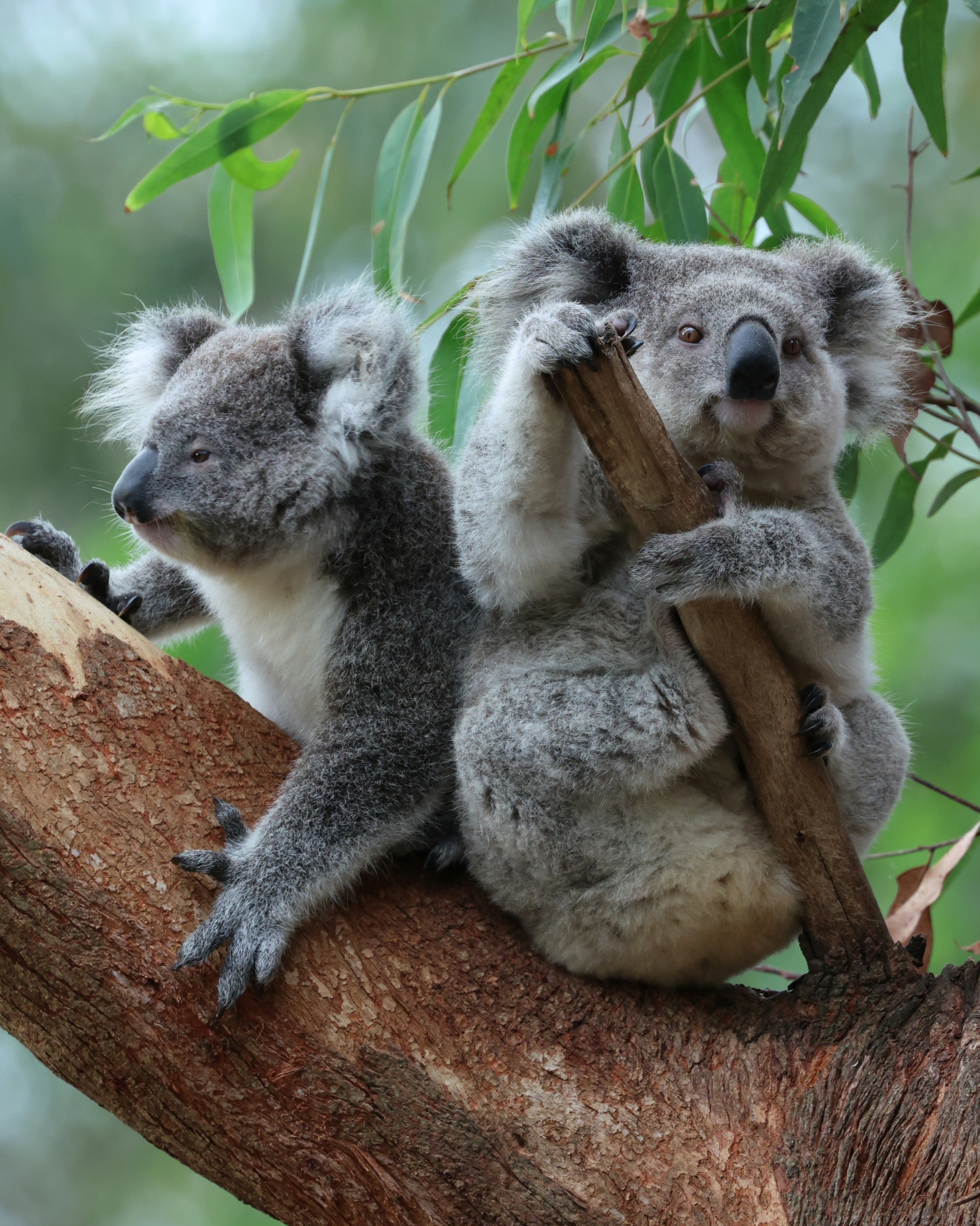
Koala breeding
- Koalas mating season between October and February, making spring and summer the season in the gum trees the time for new arrivals.
- During breeding season, adult male koalas make deep, guttural bellowing calls (sounds like a snorting snore) to attract mates and warn rival males to keep their distance. Female koalas can make the same noise, but much less often.
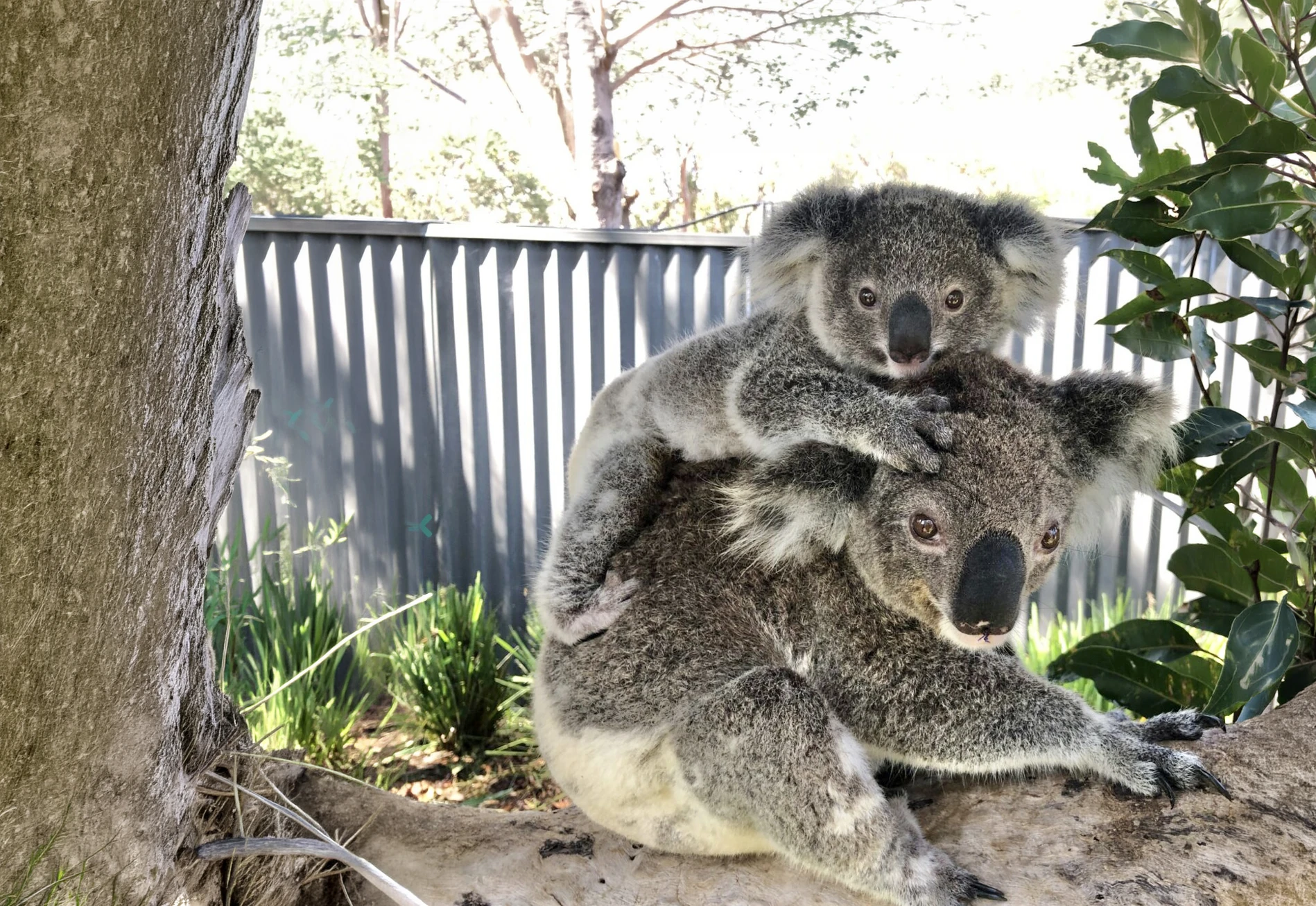
- Underdeveloped baby koalas are called joeys. They’re born the size of a jellybean (tiny enough to fit on a teaspoon), hairless, and blind before moving into their mother’s pouch.
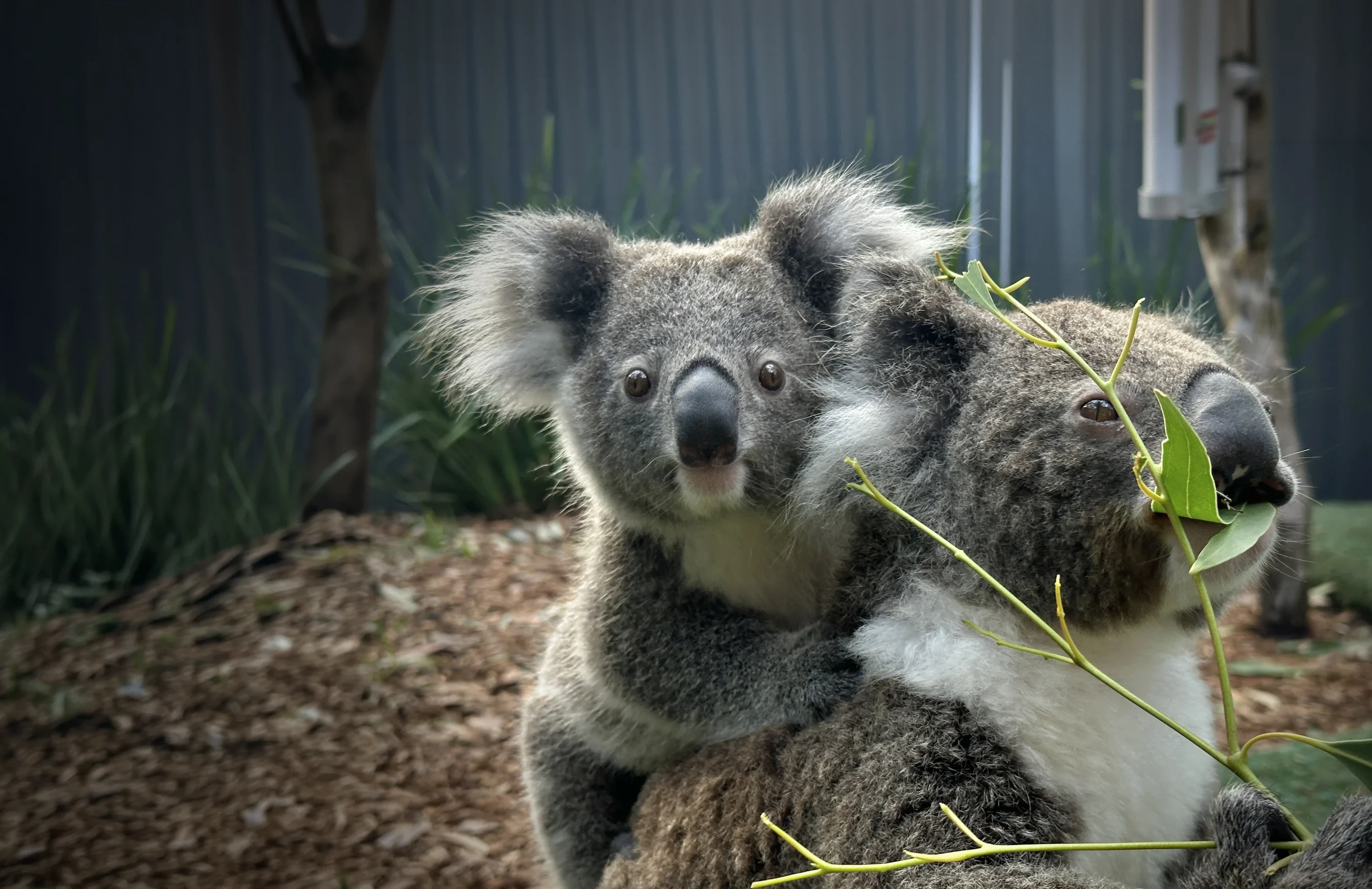
- Koala joeys stay in their mother’s backward-facing pouch for about six months, then ride on mum’s back for another six months before going it alone.
- A joey drinks ‘pap’ from its mother, which is a special soft poop paste that helps it digest eucalyptus later in life.
- Koalas have just one joey at a time. Twins in the wild are very rare.
Koala threats
- Koalas are vulnerable to heat stress, especially during heatwaves and very hot weather.
- Many koalas that come into care are affected by more than one issue at the same time, such as disease combined with dehydration or injury.
- Domestic dog attacks are one of the most preventable causes of injury to koalas in urban and semi-rural areas.
- Car strikes are a major threat to koalas. Roads cut through their habitat, forcing them to cross busy traffic in search of food, mates and new territory, and putting them at significant risk of injury or death.
- Chlamydia is a common disease in koalas that can cause serious health problems, including eye infections, reproductive tract infections and infertility, and bladder disease.
- Bushfires can have a severe impact on koala populations, destroying habitat, food trees and safe shelter in a very short time.
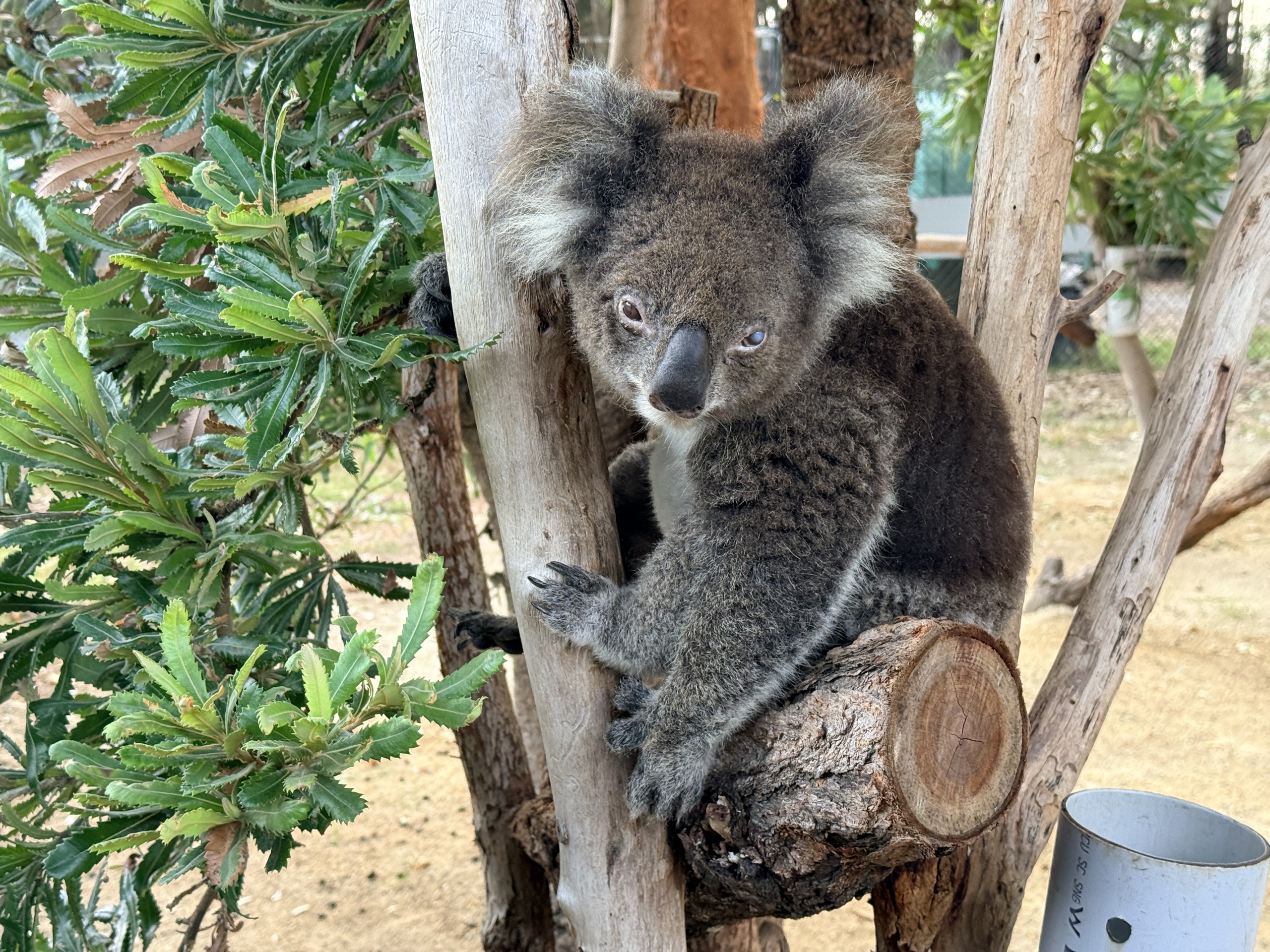
Koala conservation
- Koalas are found only in Australia – and have become one of our iconic animals. They have an estimated population of around 300,000–600,000 individuals, with numbers varying significantly across regions.
- In many parts of NSW, koala numbers are thought to have declined significantly over recent decades due to habitat destruction and loss, disease and road impacts.
- Protecting food trees (like eucalyptus corridors) is one of the most important ways to protect koalas and support long-term koala survival.
- Australia has dozens of koala-focused organisations and over 100 wildlife rescue groups that help care for injured and sick koalas across the country.